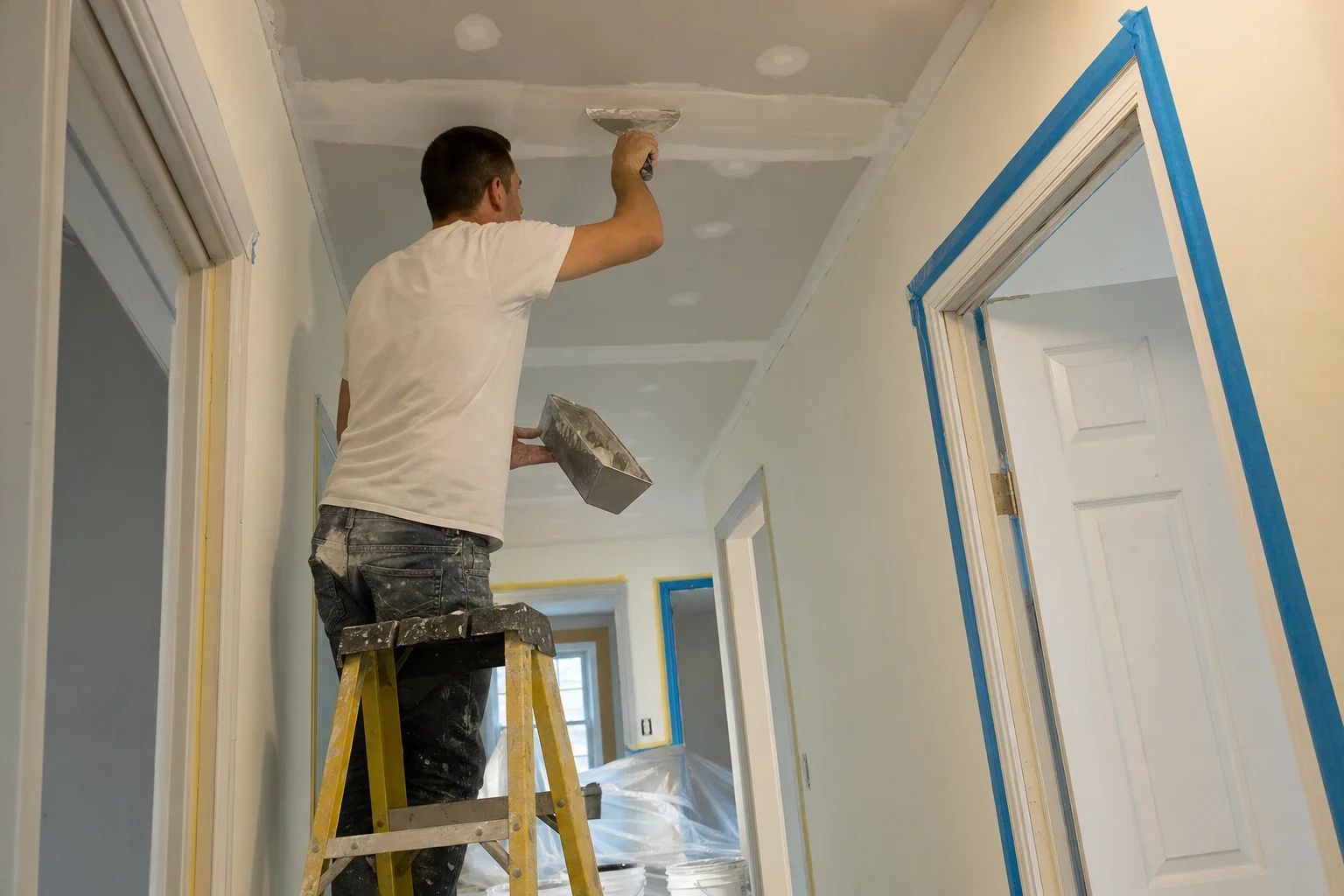
Drywall Repair in Hempstead, Done to Match the House You Have
We repair, patch, hang and finish drywall and fix damaged ceilings in Hempstead and nearby towns like West Hempstead and Uniondale. Walls that have been lived with for decades rarely hold one surprise. We open them carefully, sort out past repairs and finish each patch so the texture and sheen match what surrounds it.
- Written line-item estimates
- Photos of what we find
- Texture matched by hand
- Clean work area daily
Drywall and Ceiling Work We Handle
Our work covers drywall repair and drywall patching, from nail pops and doorknob holes to sections cut out after a leak. We hang new board, take it through drywall finishing to a smooth, even surface, and handle wall repair and ceiling repair in rooms where the damage is wider than a single patch. Surface preparation and sanding and a final paint touch-up on the repaired area round out each job, so you are not left with a gray square of compound on the wall.
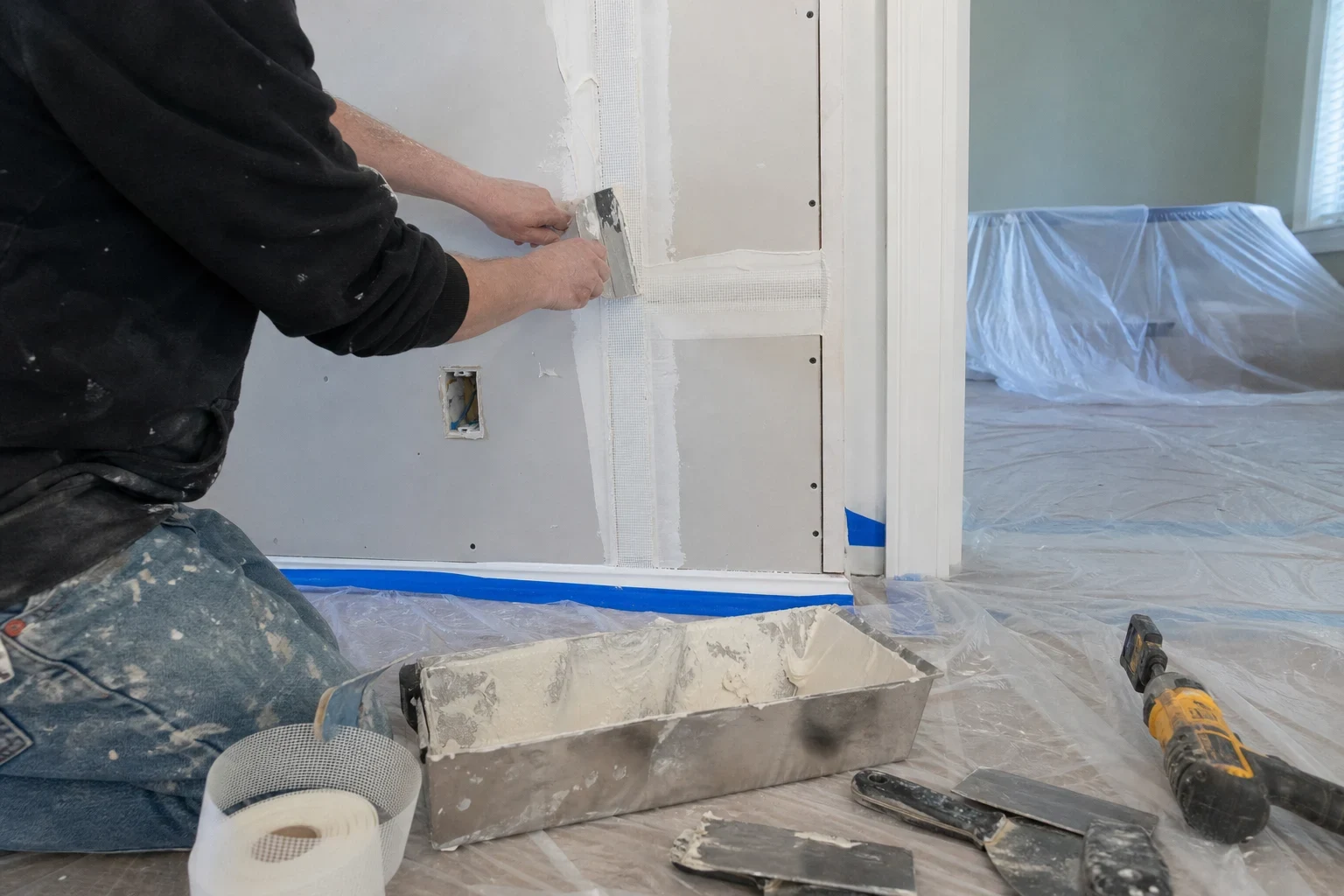
Drywall Repair
Cracks, holes, popped screws and tired old patches repaired properly, sanded smooth and matched to the wall around them.
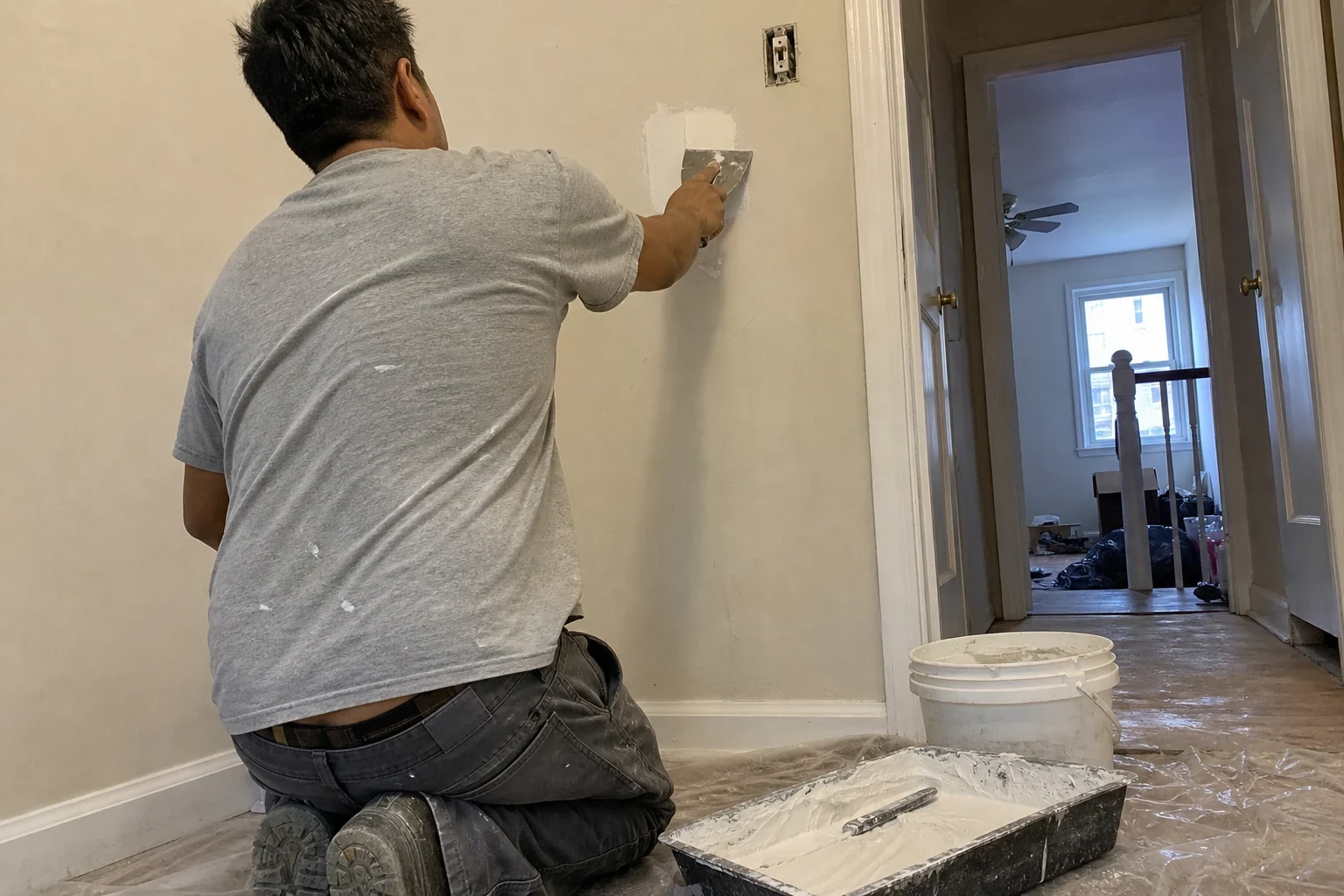
Drywall Patching
Clean, backed patches for doorknob holes, anchor holes and access cut-outs, blended into the wall around them so you stop noticing the spot.
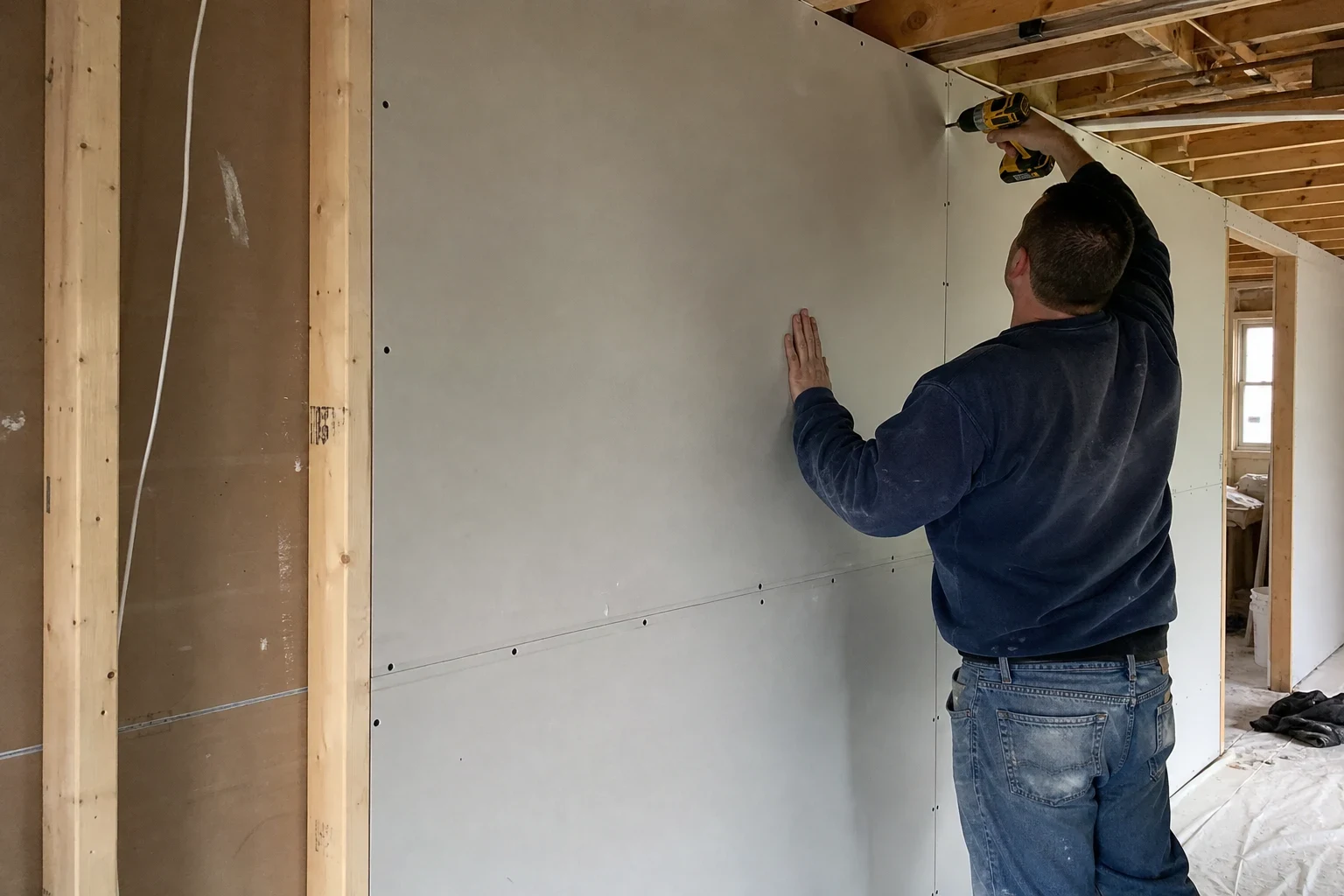
Drywall Hanging
New sheets hung over bare studs or old plaster, with the framing checked and straightened first so the finished wall sits flat.
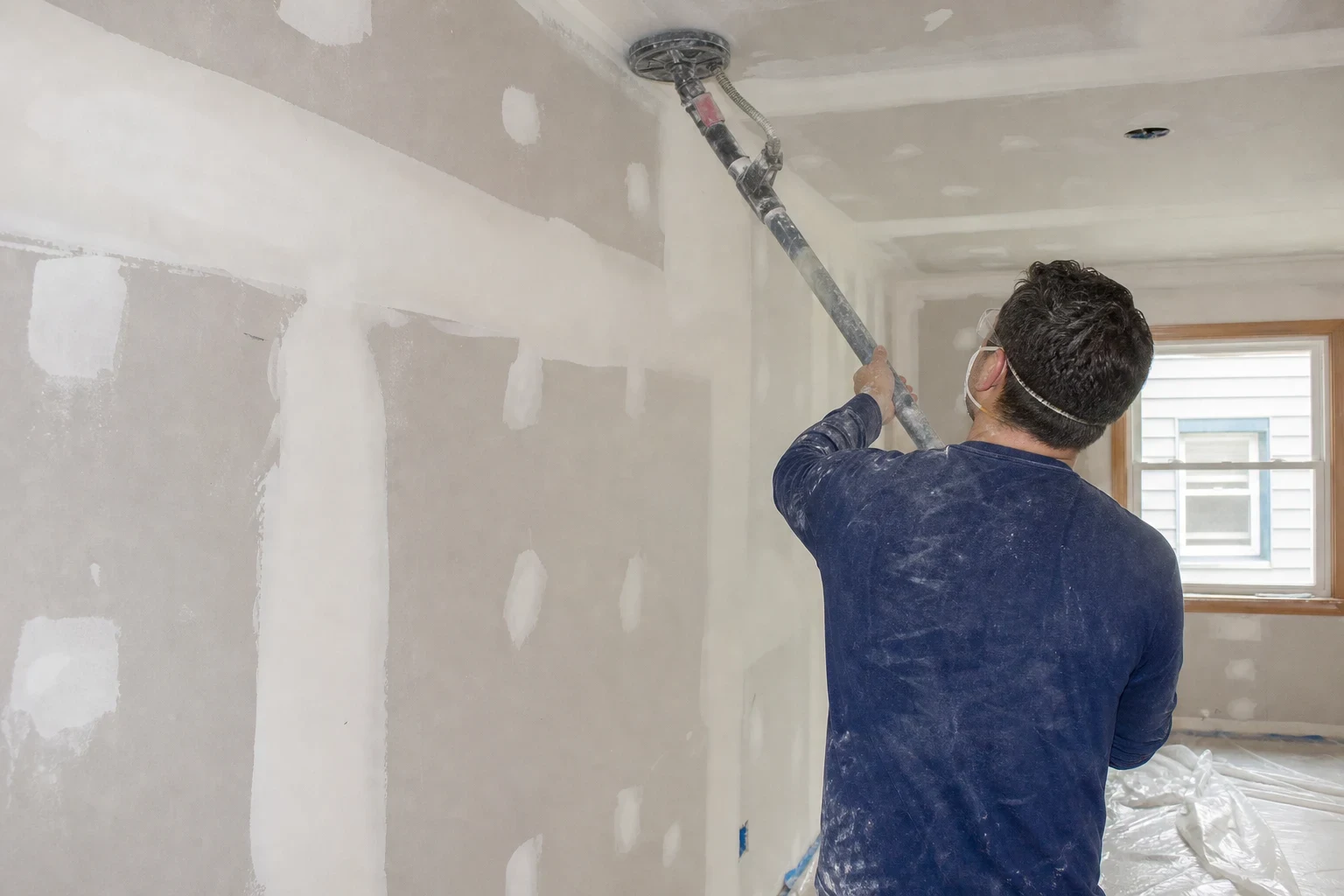
Drywall Finishing
Taping, mudding and sanding new or repaired drywall to the finish level your room needs, including blending into older walls and plaster.
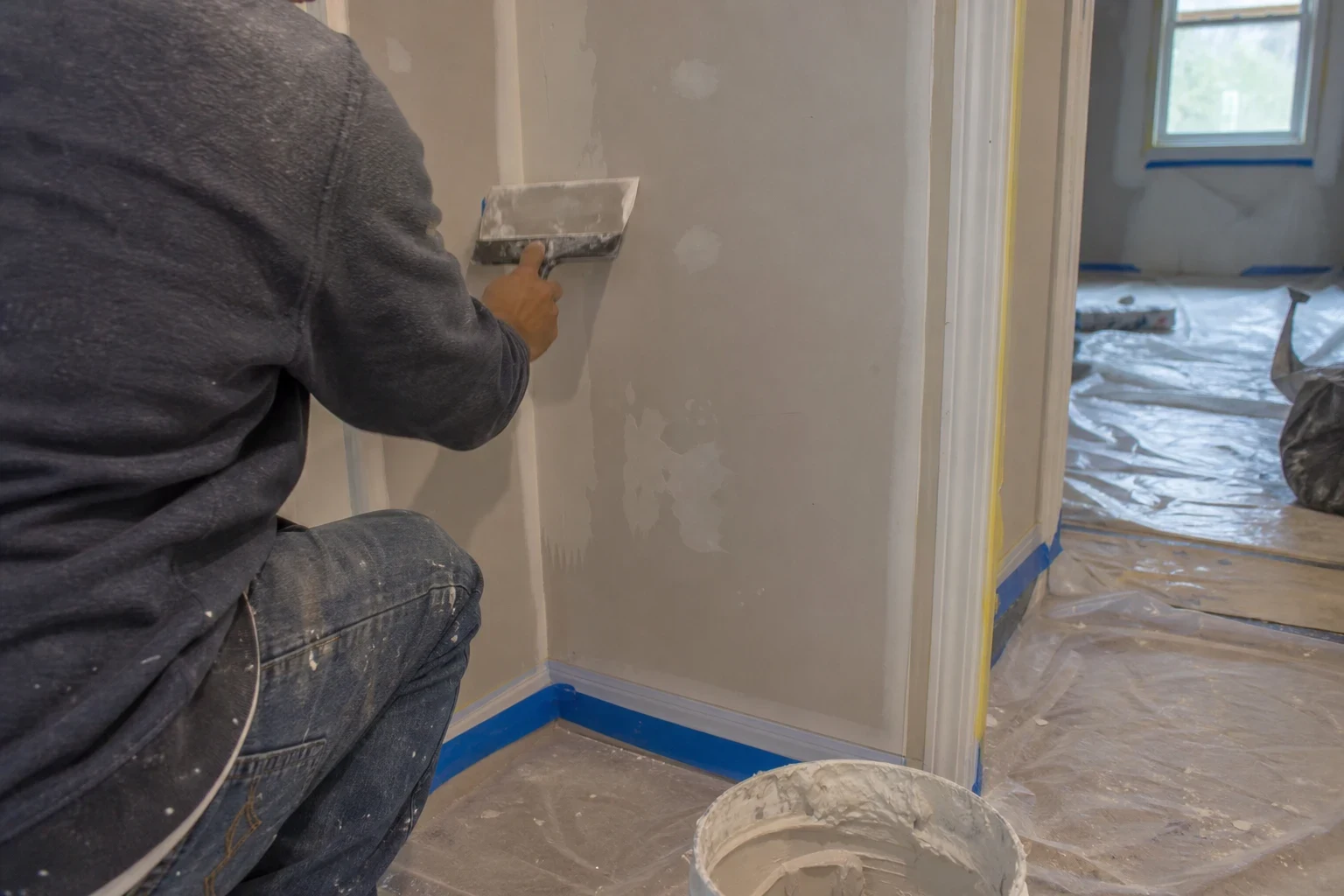
Wall Repair
Cracks, dents, loose plaster and tired old patches repaired at the cause, then feathered and textured so the wall reads as one surface again.
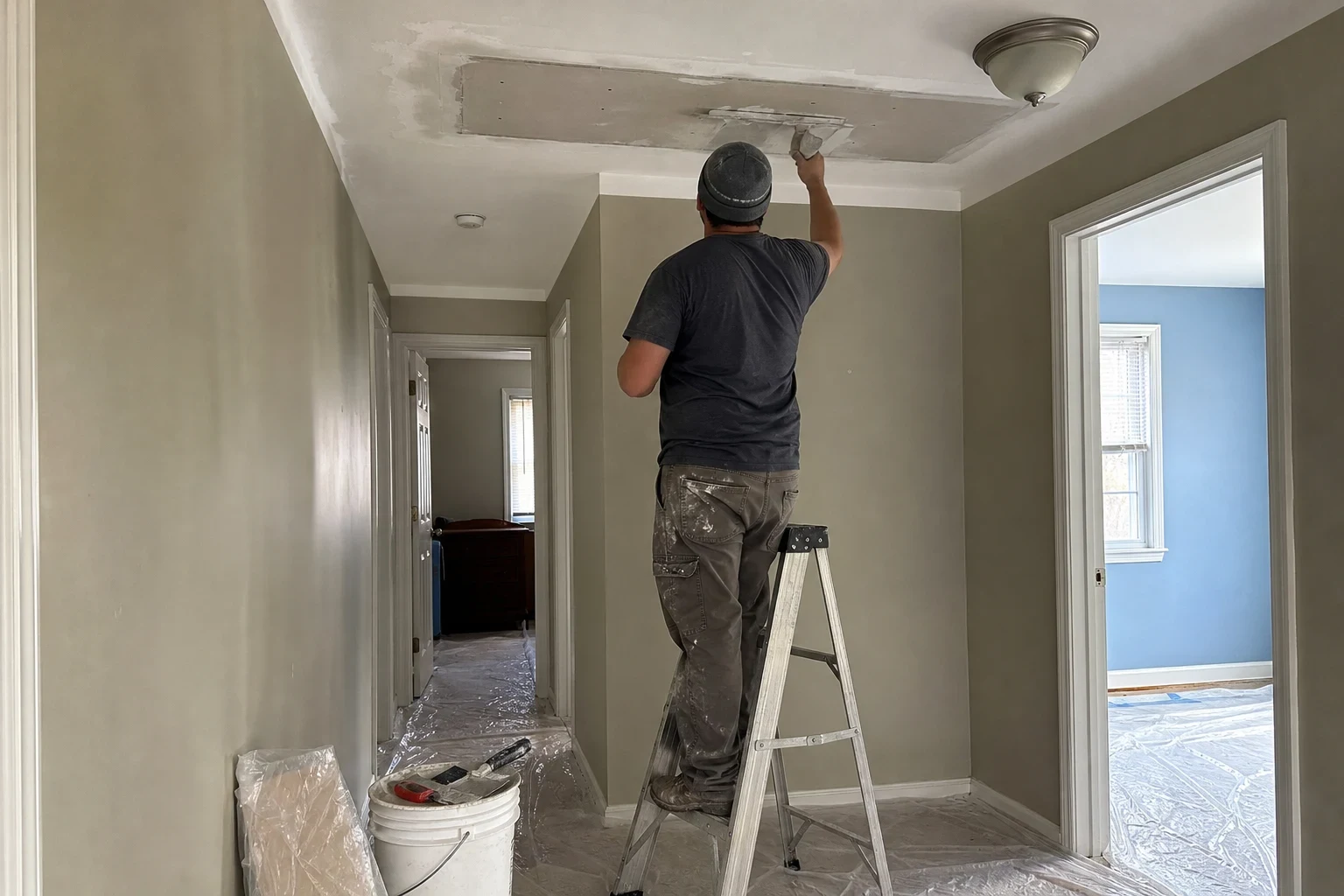
Ceiling Repair
We repair cracked, stained and sagging ceilings, find out what earlier repairs left behind, and blend the new surface so it disappears into the old.
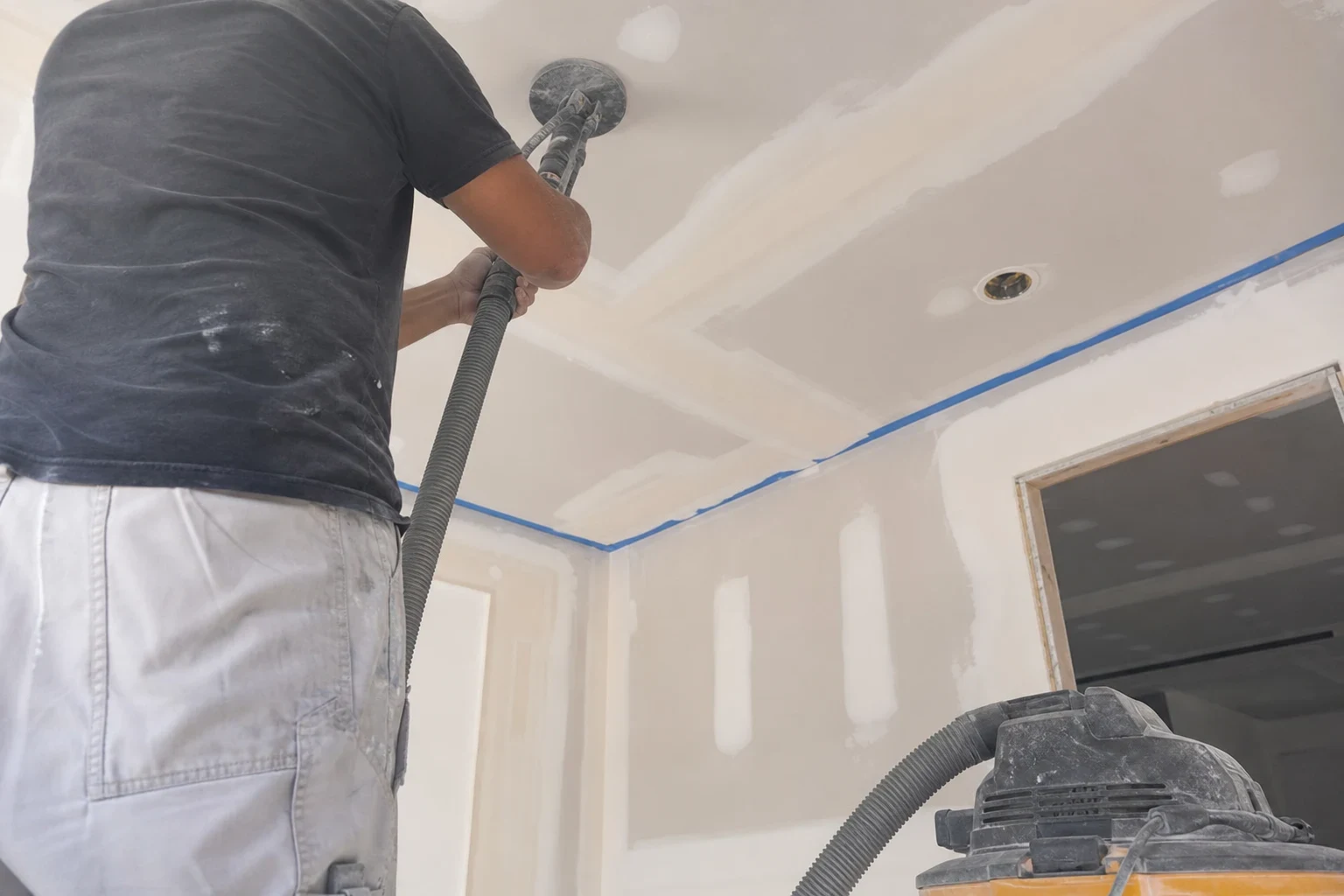
Surface Prep and Sanding
Scraping, filling, skim coating and dust-controlled sanding that turn layered, patched walls into a smooth surface ready for primer.
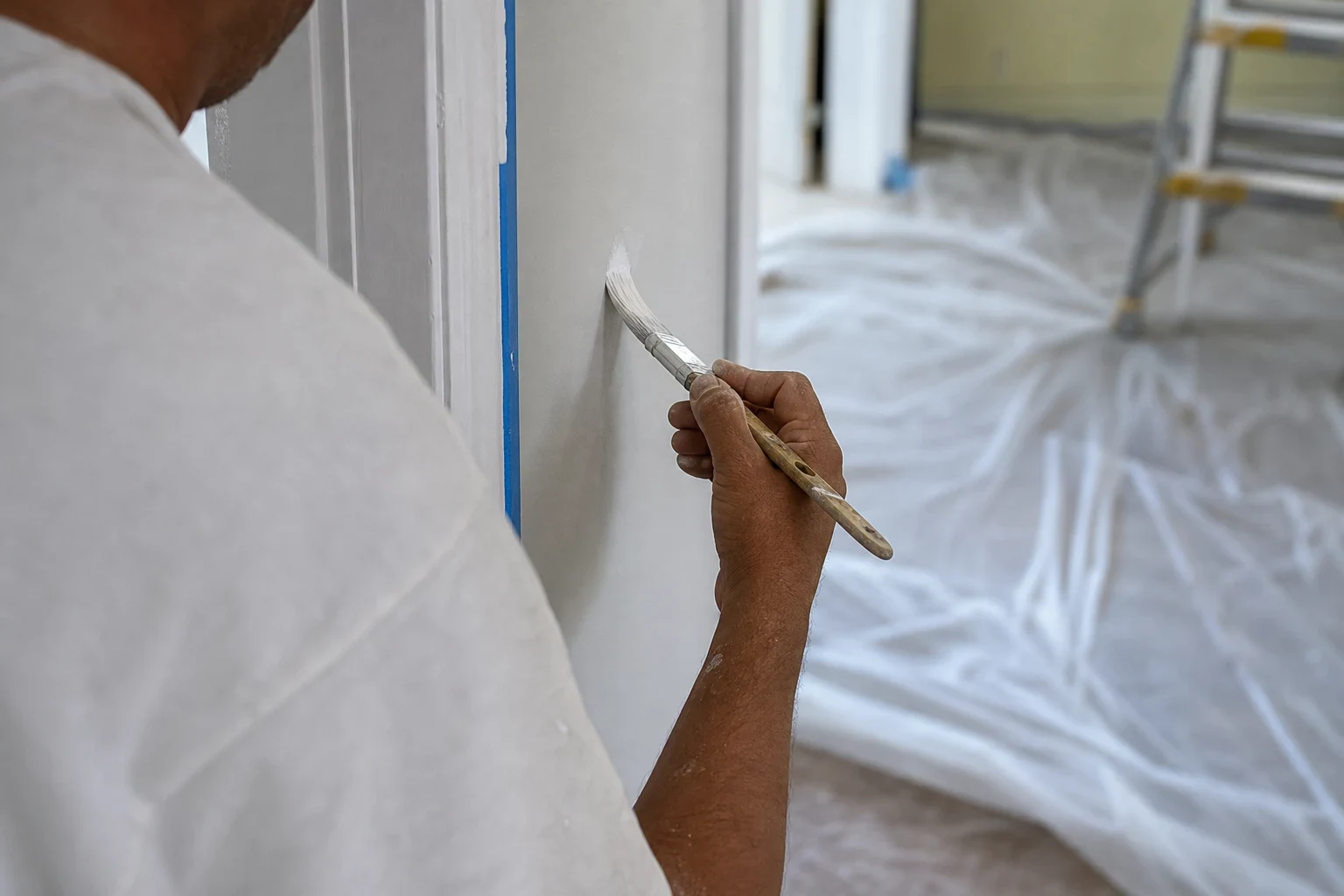
Paint Touch-Ups
Color and sheen matched over patches, scuffs and repairs so the finished spot blends into the wall around it.
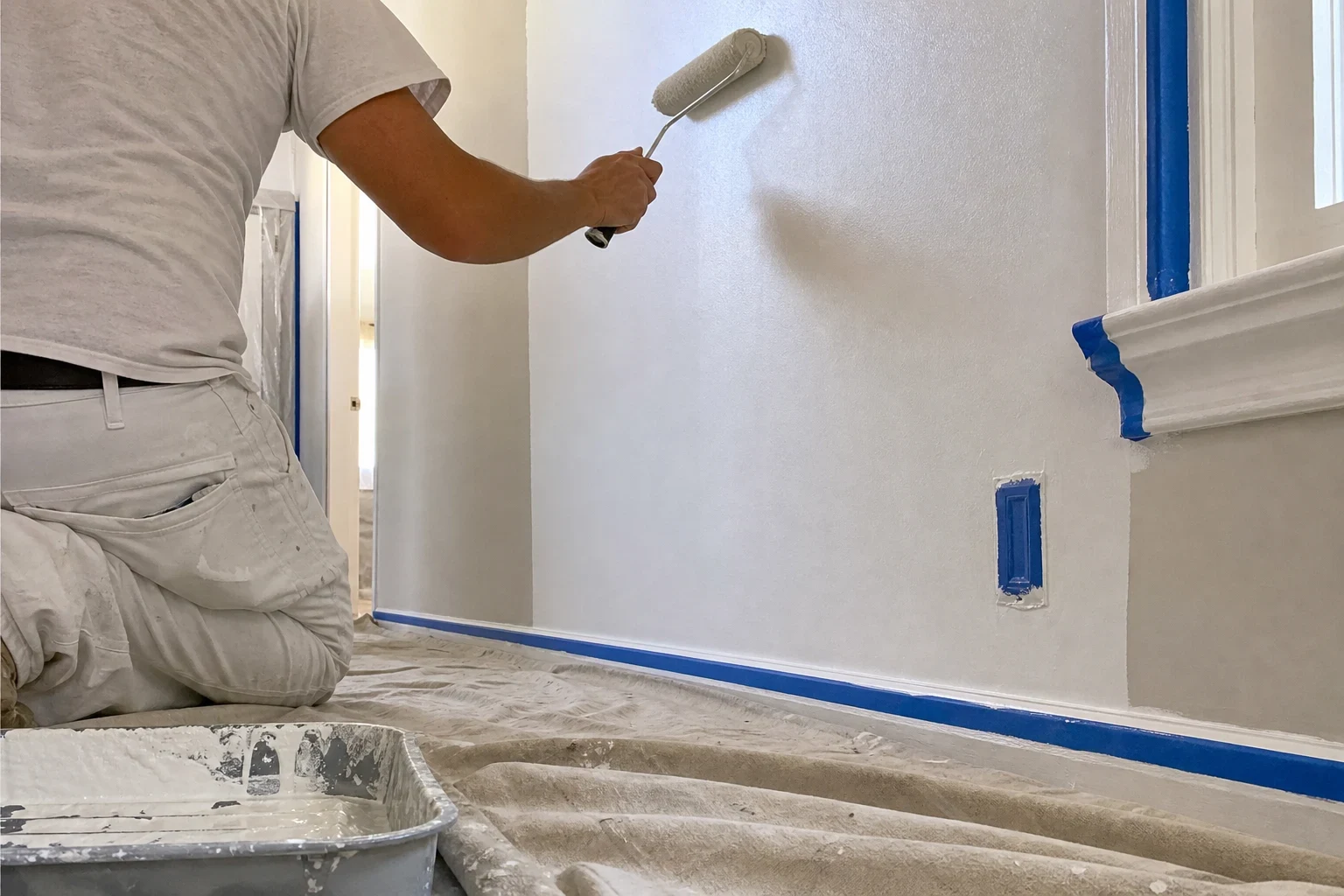
Pre-Paint Prep
Planning to repaint? We handle the drywall side first, with cracks, nail pops and old patches fixed and sanded so the paint has a sound, even surface.
How a Job Runs
Every job follows the same order, from first conversation to the last paint touch-up.
- 1
A phone conversation
You tell us what happened and where. Photos you have taken help us come prepared with the right board thickness and materials.
- 2
Walkthrough and estimate
We look at the damage, check the surrounding wall for soft spots and earlier repairs, and write up what we recommend line by line.
- 3
Protect the room
Floors are covered, doorways sealed, and nearby furniture moved or wrapped before any cutting or sanding starts.
- 4
Repair, finish and sand
We cut back to sound material, set new board or patch, tape and apply compound in thin coats, then sand and match the texture so the repair sits flush with the wall.
- 5
Touch-up and final look
We prime the repair and apply a paint touch-up when your existing paint is available, then walk the room with you under good light.
Where We Work
We are based in Hempstead, NY, and work in homes throughout the surrounding area. That includes Uniondale, West Hempstead, South Hempstead, Levittown, East Meadow and Elmont, along with Freeport, Baldwin, Valley Stream and Oceanside.
- Hempstead
- Uniondale
- West Hempstead
- South Hempstead
- Levittown
- Freeport
- Valley Stream
- Elmont
- East Meadow
- Baldwin
- Oceanside
If your town is not listed, ask when you reach us by phone. Many nearby communities are within our regular range.
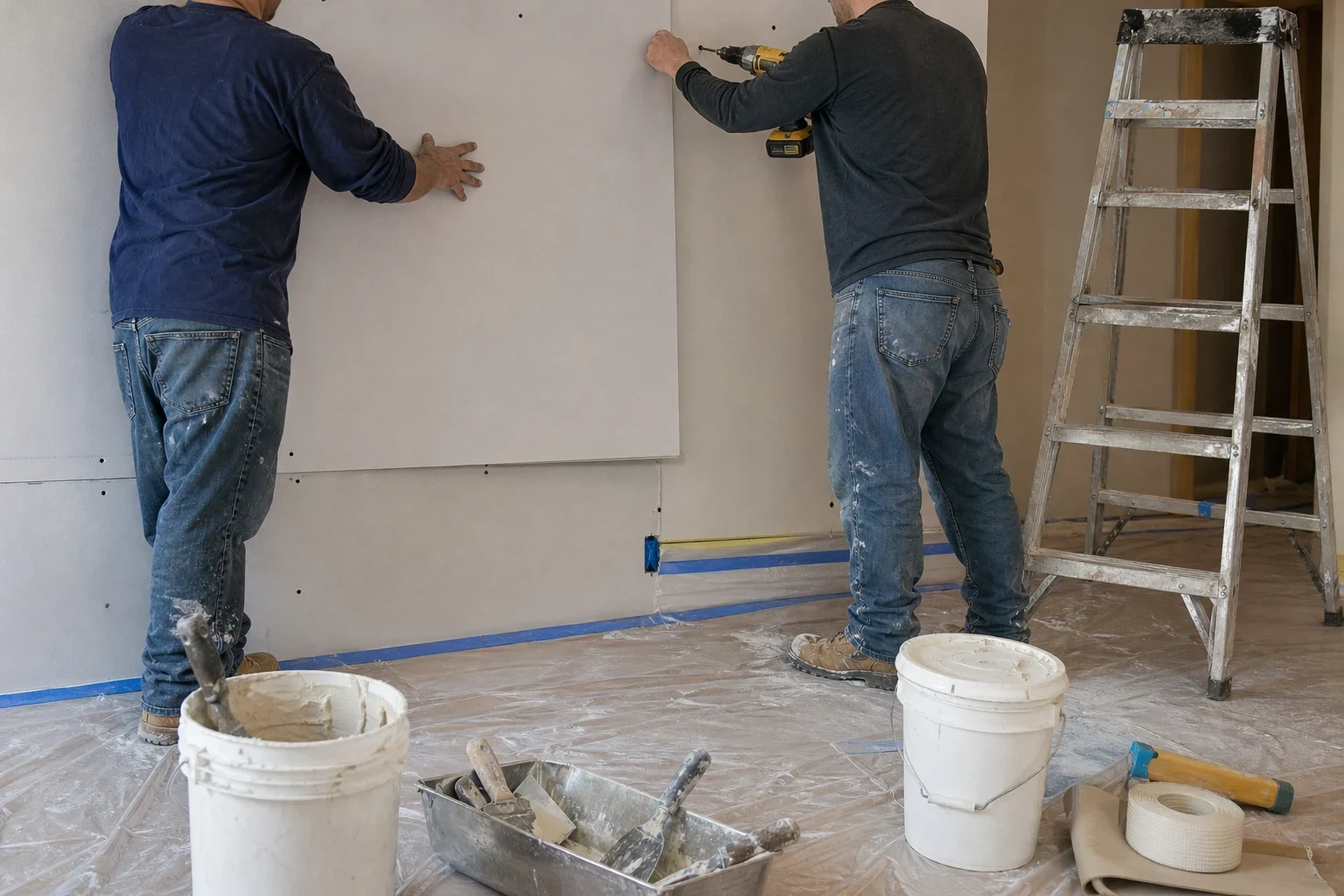
A Drywall Company That Works Slowly Where It Counts
Drywall Repair Hempstead focuses on one thing: walls and ceilings that look right when the work is done. Much of what we see on Long Island is postwar and mid-century housing, where earlier owners have patched, added on and remodeled over the decades. That history shows up the moment a wall is opened.
We would rather spend an extra hour feathering a joint than leave a ridge you notice every time the afternoon sun hits it. We explain what we see in plain terms, keep the work area clean, and leave the room ready to live in again.
How We Work on Walls With a History
Walls in an older house carry the history of every owner before you. We plan around that history instead of pretending it isn't there.
- 01
We read past repairs before cutting
Many walls have been patched two or three times, sometimes with the wrong compound or over loose tape. We look at how earlier work was done and remove what will not hold, so a new patch is not sitting on an old failure.
- 02
Texture matching by eye and by hand
Many earlier finishes were applied by hand, with knockdown, orange peel or a light skim that no spray can reproduces. We test the texture on a scrap first, then feather it into the surrounding wall until the edge disappears under raking light.
- 03
Plaster and drywall side by side
Some rooms mix original plaster with later drywall. The two move differently and sit at different thicknesses. We shim, tape and build the joint so the transition stays flat and does not crack along the seam a season later.
- 04
A straight answer on repair or replace
If a patch will do, we say so. If a section is soft, stained through or pulling off the framing, we show you why replacing that piece of board is the better use of your money, with photos you can keep.
- 05
Your home kept clean
We cover floors, seal doorways with plastic and sand with dust control in mind. At the end of each day the work area is swept and vacuumed, and furniture goes back where it was.
What Shapes the Cost of Drywall Work
No two repairs cost the same, and in a house that has been remodeled before, the price often depends on what sits behind the surface. Here is what moves the number, so the estimate makes sense when you see it.
We look at the damage in person and give you a written, line-item estimate before any work begins. If we find something unexpected once a wall is open, we stop, show you, and agree on it with you first.
- Size and number of areas
- One fist-sized hole and a dozen scattered dings across three rooms are very different jobs. Grouping repairs into a single visit usually uses time and drying cycles more efficiently.
- What we find underneath
- Loose tape, crumbling earlier patches, rusted metal corner bead or framing that has shifted all add steps. We photograph these conditions and explain them before the work goes further.
- Texture and finish level
- A flat, smooth wall is quicker to blend than a hand-applied texture. Walls seen under strong window light may need a higher finish level so the repair does not show.
- Ceilings and access
- Ceiling repair takes more setup than wall work, and stairwells or high ceilings need staging. Old textured ceilings may need testing before they are disturbed, which affects timing.
- Drying time and visits
- Joint compound needs time between coats, and humid summer weather slows it down. A repair that needs three coats and sanding often means more than one visit.
Questions We Hear Most
Something not covered here? (516) 604-5030
Can you match the texture on my walls so the patch doesn't show?
In most cases, yes. We look at how the original texture was applied and test it before putting it on your wall. Hand-applied finishes take more care, and we blend past the edge of the patch so there is no hard line. Paint sheen matters too, so we touch up with your existing paint when you have it.
My house has plaster walls. Can you still repair them?
Yes. Many older homes have plaster, or a mix of plaster and later drywall. We secure loose areas, fill or replace damaged sections, and build the surface so it sits flush with the plaster around it. The aim is a repair that holds without cracking along the joint.
How messy will this be?
Drywall work makes dust, so we plan for it. Floors are covered, doorways are sealed with plastic, and we sand with dust control in mind. We clean up at the end of each day rather than leaving it all for the last visit.
How long does a typical repair take?
Small patches can often be completed over a couple of short visits because compound has to dry between coats. Larger sections, new board or ceiling repair take longer. We give you a realistic schedule with the estimate, and humid weather can add drying time.
My ceiling has a water stain. Can you fix it?
We repair the ceiling once the source of the water has been stopped by the right trade. If the board is still firm, sealing the stain and refinishing may be enough. If it is soft or sagging, we cut out the damaged section and replace it, then match the finish.
Will you help with my insurance claim?
We do not act as your adjuster, but we can give you a written, line-item estimate and photos of the damage and the opened wall. Those are the documents most adjusters ask to see, and you can share them as you need.
Do you work with landlords and property managers?
Yes. We repair drywall and ceilings in rental units and coordinate access with you or your tenant. A line-item estimate for each unit keeps the records clear.
Let's Look at Those Walls Together
Tell us what happened and what you're seeing. We'll set up a visit, look at the damage and the history around it, and give you a written estimate you can read line by line.