ServicesDrywall Hanging
Drywall Hanging in Hempstead
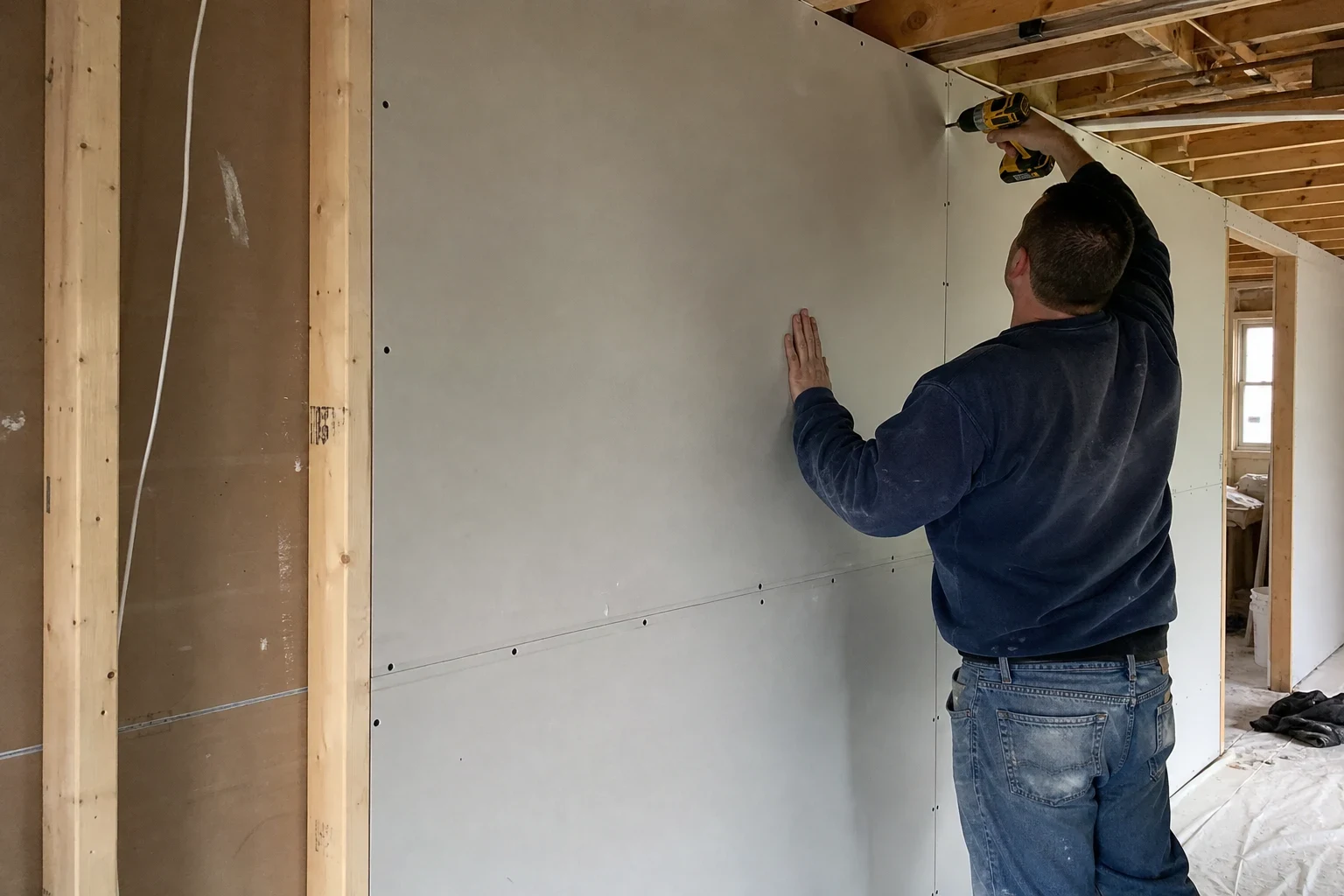
We hang new drywall in finished basements, opened-up rooms and walls taken back to the studs. Before a single sheet goes up, we check the framing behind it, because a flat, quiet wall starts with what it is fastened to.
New Drywall, Started From the Framing Out
Drywall hanging is the right call when a wall or ceiling needs new board rather than a repair. That usually means old plaster coming down, a basement being finished, an attic room being closed in, or a wall opened for electrical work that now needs to be put back.
Older houses make this work more careful than it looks. Studs dry and twist over decades, joists sag a little, and earlier owners often left furring strips, shims or mixed lumber behind. We find those spots and correct them before hanging, so seams stay tight and the joint compound does not have to hide a crooked wall.
Once the board is up, most rooms move straight into drywall finishing for taping, mudding and sanding. We can carry the job through or hand it off clean, whichever suits your plans.
What Our Hanging Work Includes
Framing check and shimming
We run a straightedge across the studs and joists. High spots are planed, low spots are shimmed, and loose blocking is refastened so the sheets land flat.
The right board for each room
Standard half-inch for most walls, five-eighths for ceilings so they resist sagging, and moisture-resistant board in bathrooms and damp basement corners. Fire-rated board goes where code calls for it, such as a wall shared with an attached garage.
Layout that limits seams
We plan sheet direction and size to cut down on butt joints, and keep seams away from window and door corners where cracks like to start.
Proper fastening
Screws are set at the spacing the board calls for, just below the paper face without tearing it. Ceilings get closer spacing and, where it helps, construction adhesive.
Openings cut clean
Outlet boxes, switches, vents and light fixtures are measured and cut so cover plates sit snug, with no oversized gaps to fill later.
Cleanup each day
Offcuts and scrap are bagged and removed, and we leave a clean work area at the end of every day you are living around the job.
Signs a Room Needs New Drywall
Plaster pulling off the lath
When plaster bulges, sounds hollow or crumbles at a touch, the keys holding it have failed. Patching rarely holds long, and new board is often the steadier answer.
Water damage across a large area
Soft, stained or swollen board over more than a few square feet usually needs to come out. Once the source is fixed and the cavity is dry, we hang fresh sheets.
Bare studs waiting to be closed
A basement, attic or new partition with open framing is ready for hanging as soon as insulation and wiring have been inspected.
Layers of old repairs
Walls with patch over patch, uneven thickness and visible ridges can cost more to fix than to replace. We give you an honest answer on which makes sense.
How a Hanging Job Runs
- 1
Walkthrough and measuring
We look at the room, open up a spot if the framing is in question, and measure for board and layout. You hear what we found and what we suggest before anything is ordered.
- 2
Protecting your home
Floors are covered, doorways are sealed with plastic, and furniture is moved out or wrapped. Removal of old plaster, when needed, happens first and the debris leaves the house that day.
- 3
Straightening and hanging
Framing is corrected, then ceilings go up before walls so the wall sheets support the ceiling edges. Each sheet is fastened and the openings are cut as we go.
- 4
Walkthrough before finishing
We check every seam and screw line with you, fix anything proud or loose, and talk through the drywall finishing stage that comes next.
What Shapes the Cost of Hanging
We price hanging after seeing the room, because the board is only part of the job. What sits behind the wall, and what has to come off it first, moves the number more than square footage alone. You get a written estimate that lists each part of the work.
- Room size and ceiling height
- More square footage means more board and labor. Ceilings and tall stairwell walls take extra hands and staging.
- Board type
- Five-eighths, moisture-resistant and fire-rated sheets cost more than standard half-inch and are heavier to handle.
- Framing condition
- Twisted studs, sagging joists or old furring strips add straightening time before hanging can start.
- Demolition and access
- Taking down plaster and lath is slow, dusty work with real disposal costs. Narrow stairs and tight basements also add time carrying sheets in.
Drywall Hanging Questions
Something not covered here? (516) 604-5030
Can you hang drywall right over my old plaster walls?
Sometimes. If the plaster is firmly attached and the wall is reasonably flat, quarter-inch or three-eighths board can go over it, which saves demolition and mess. Trim and outlet boxes then need extending, so we weigh that against removal and tell you which we would choose in your house.
Will the new walls line up with the old ones next to them?
That is where most of our care goes in older homes. Plaster walls are often thicker than modern board, so we shim or adjust the board thickness to bring the new surface level with the old at the transition.
Do I need moisture-resistant board in a basement?
For most finished basements, yes, especially on exterior walls and near laundry areas. It holds up better to the dampness basements see in humid summers. Any active water problem has to be solved first, since no board will survive standing moisture.
Can we stay in the house while you work?
Yes. We seal the work area with plastic, keep a clear path through your home, and clean up at the end of each day. Plaster removal is the dustiest stage, and we will let you know when that day is coming.
Does hanging include taping and finishing?
Hanging is the board going up, fastened and cut in. Taping, mudding and sanding are part of drywall finishing, which we also do. Most customers have us carry the room straight through so the finish is matched to how the board was hung.
Planning a Room With New Drywall
Tell us about the room, what is on the walls now and what you want it to become. We will talk through the framing questions and set a time to come measure.