ServicesDrywall Patching
Drywall Patching in Hempstead
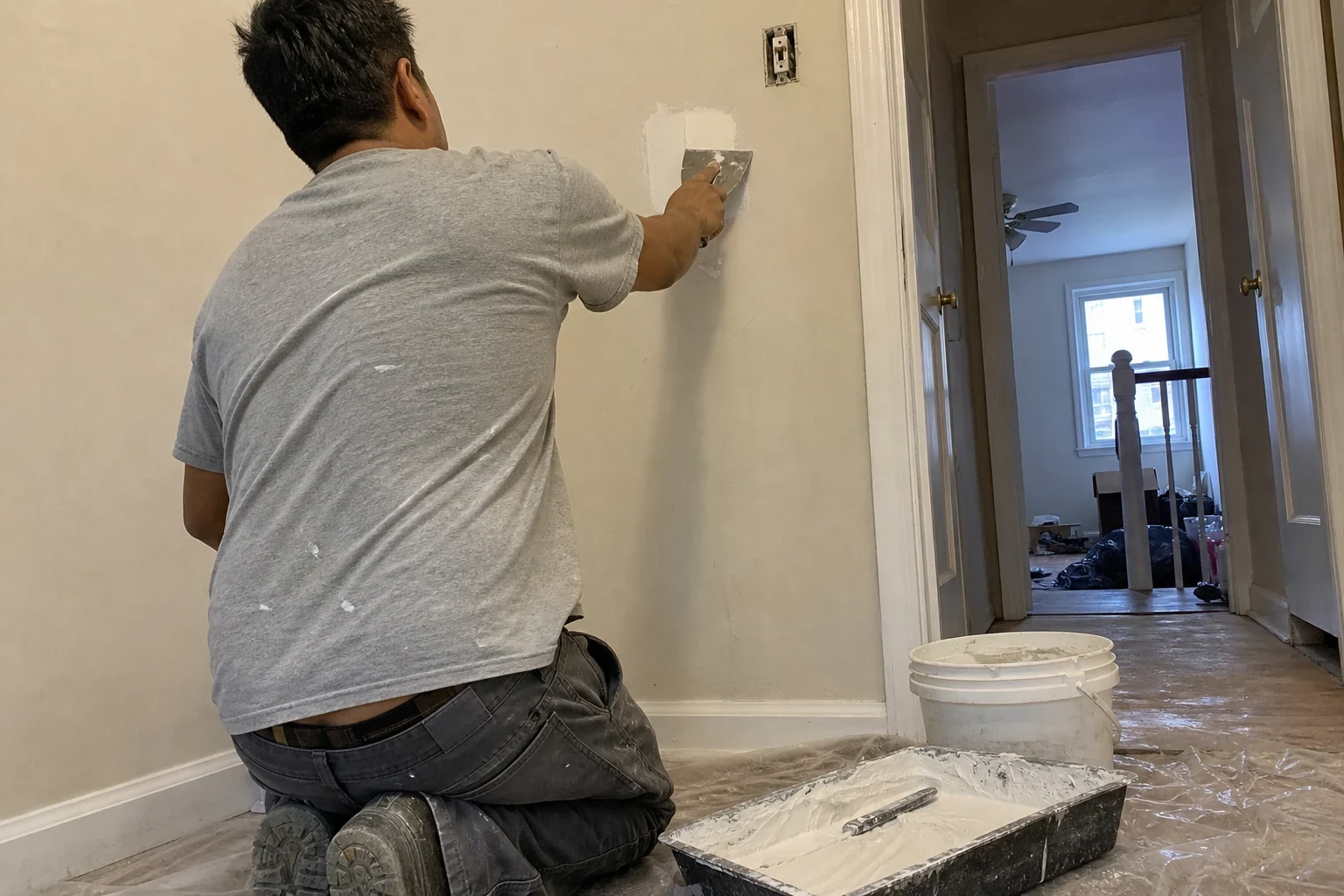
A hole in the wall should end up as a wall again, not a visible square. We cut back to sound material, back the patch properly, build it up in thin coats and sand it until the repair blends into the surface around it.
When a patch is the right fix
Patching suits damage that is contained: a doorknob hole, anchor holes from a shelf or TV mount, a dent from moving furniture, or the square opening left after an electrician worked behind the wall. The surrounding board is sound, so we replace only the damaged section rather than a full sheet.
Older walls make even small patches less simple than they look. What sits behind the paint may be gypsum board, plaster over lath, or a previous repair that was never backed and is now cracking at its edges. We check what we are working with before cutting, because the right material and thickness are what keep a patch flat and stop it from showing later.
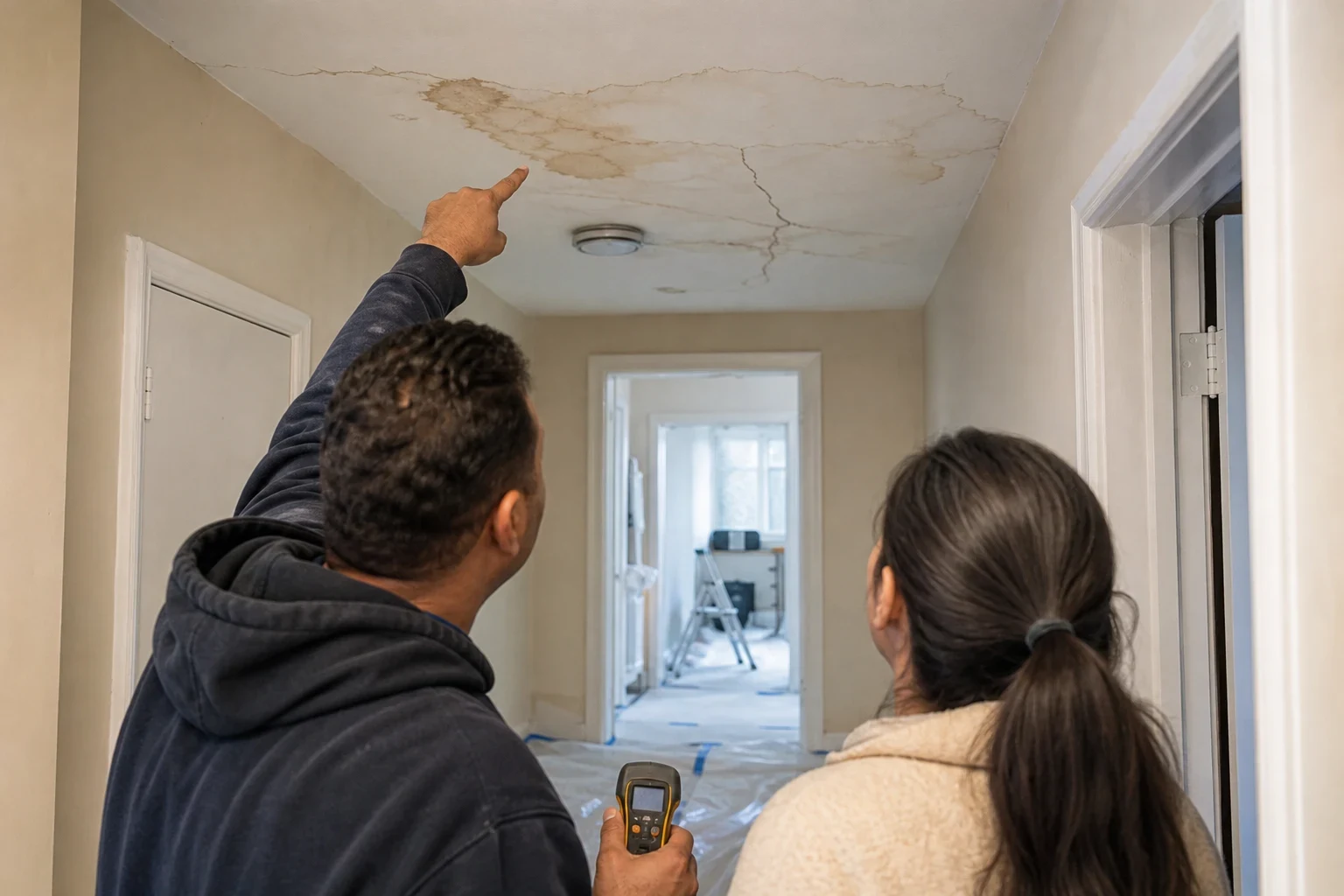
If the damage is wider, keeps coming back, or involves water, our drywall repair or wall repair service is usually the better fit, and we will tell you so.
What our patching work covers
- 01
Small and medium holes
Nail pops, anchor holes and fist-sized openings are filled or cut out and replaced with new board, then taped and coated.
- 02
Proper backing
Larger holes get wood or drywall backing fastened behind the opening. A patch with nothing behind it tends to flex and crack within months.
- 03
Access and outlet cut-outs
Openings left after electrical or other work behind the wall are squared up, fitted with new board and finished flush.
- 04
Redoing failed old patches
Bulging, cracked or outlined repairs from years past are cut out and rebuilt instead of skimmed over again.
- 05
Texture matching
Where the wall has a light texture or the slight waviness of an older plaster finish, we feather and texture the patch to match what surrounds it.
- 06
Sanded and primed
Every patch is sanded smooth and spot-primed so it accepts paint evenly. If you want color applied, our paint touch-ups service can follow.
Questions about Drywall Patching?
Call(516) 604-5030Signs a wall needs patching
A doorknob hole behind the door
Common where a door has no stop. We patch it and can point out where a stop would prevent a repeat.
Holes left by a removed mount
TV brackets and shelving leave anchor holes and torn paper that filler alone rarely hides well.
An old patch you can still see
A raised square, a hairline outline or a soft spot that gives when pressed usually means an earlier repair was done without backing or tape.
An access hole that was never closed
After work inside the wall, the opening is often left raw. It is a straightforward patch once the work behind it is finished.
Dents and gouges at corners
Furniture and moving day leave crushed paper and dents that catch light at a low angle.
How a patching visit runs
- 1
A conversation by phone
You tell us how many spots, roughly how big, and what room they are in. Photos you describe help us bring the right board and compound.
- 2
Inspect and protect
We look at the edges, tap around the damage and check for an earlier repair or plaster underneath. Drop cloths go down and furniture nearby is covered to keep a clean work area.
- 3
Cut, back and set
The damaged area is cut to clean, square edges, backing is fastened where needed, and new material is set flush with the face of the wall.
- 4
Tape and coat
We tape the joints and apply compound in thin coats, each feathered wider than the last. Depending on depth and humidity, the final coat may need a second visit after drying.
- 5
Sand, texture and prime
The patch is sanded under a work light, textured to match, spot-primed, and the area is vacuumed before we leave.
What affects the cost of patching
Patching is priced by the work involved, not by a flat fee per hole. Once we know the size, the wall type and how much finishing is expected, we can give you a clear line-item quote by phone or after a look in person.
- Size and number of spots
- Several small holes in one room can often be done together, while one large opening may need backing and more coats.
- Plaster or drywall
- Patching plaster takes different materials and more build-up to meet the old surface, so it usually takes longer than standard board.
- Previous repairs
- If an earlier patch has to be cut out and rebuilt, that adds time compared with working on clean, undisturbed wall.
- Texture and finish level
- A smooth wall in strong window light needs more sanding and feathering than a textured wall in a hallway.
- Ceiling height and access
- Patches high on stairwell walls or above built-ins need ladders or staging, which affects setup time.
Drywall patching questions
Will I be able to see where the patch was?
Our aim is that you cannot once it is painted. We feather the compound well past the edges, sand under raking light and match the texture. Paint sheen matters too, so we recommend matching the existing paint exactly when color goes on.
Can you patch plaster walls?
Yes. Many older houses have plaster over lath, and we patch it with materials suited to its thickness and hardness. We check for loose plaster around the hole first, since that needs securing before any patch will hold.
How many visits does a patch take?
Small holes are often finished in one visit. Larger patches need several coats of compound, and each must dry, so a second short visit for final sanding and priming is common.
Do I need to repaint the whole wall afterward?
Not always. A primed patch can often be touched up with leftover paint if it is fairly fresh. Older paint has usually shifted in color, in which case painting the wall corner to corner gives the most even result.
Why did my last patch crack?
Usually it had no backing, no tape, or was filled in one thick coat that shrank. We cut those repairs out and rebuild them properly rather than covering the crack.
Ready to close up that hole
Tell us what you are looking at and where it is in the house. We will explain how we would patch it and what to expect on the day, here in Hempstead and the towns nearby.