ServicesDrywall Repair
Drywall Repair in Hempstead
We repair cracked, dented and broken drywall so the wall reads as one surface again. Many walls here have been patched before, sometimes more than once. We find out what is under the damage, fix it from the framing out and finish it to match.
When drywall repair is the right call
Drywall repair covers the everyday damage walls collect: a doorknob hole, a crack running off a window corner, nail pops along a seam, a section softened by an old leak. Most of it can be fixed without replacing the whole sheet, and a well-done repair disappears once it is primed and touched up.
Older houses add a layer. A wall may be gypsum board over plaster, plaster over wood lath, or a mix left behind by earlier owners. A crack that keeps coming back usually means the last repair covered the symptom and left the cause. We open enough of the wall to see what is really going on before we commit to a fix, and we tell you what we found.
If the damage is small and isolated, our Drywall Patching page may fit you better. For water-stained or sagging overhead areas, see Ceiling Repair.
What the repair includes
- A look behind the damage
- We check the edges of the damaged area for loose board, crumbling plaster, rusted fasteners or soft gypsum. Photos of anything unexpected are yours to keep.
- Proper backing and fastening
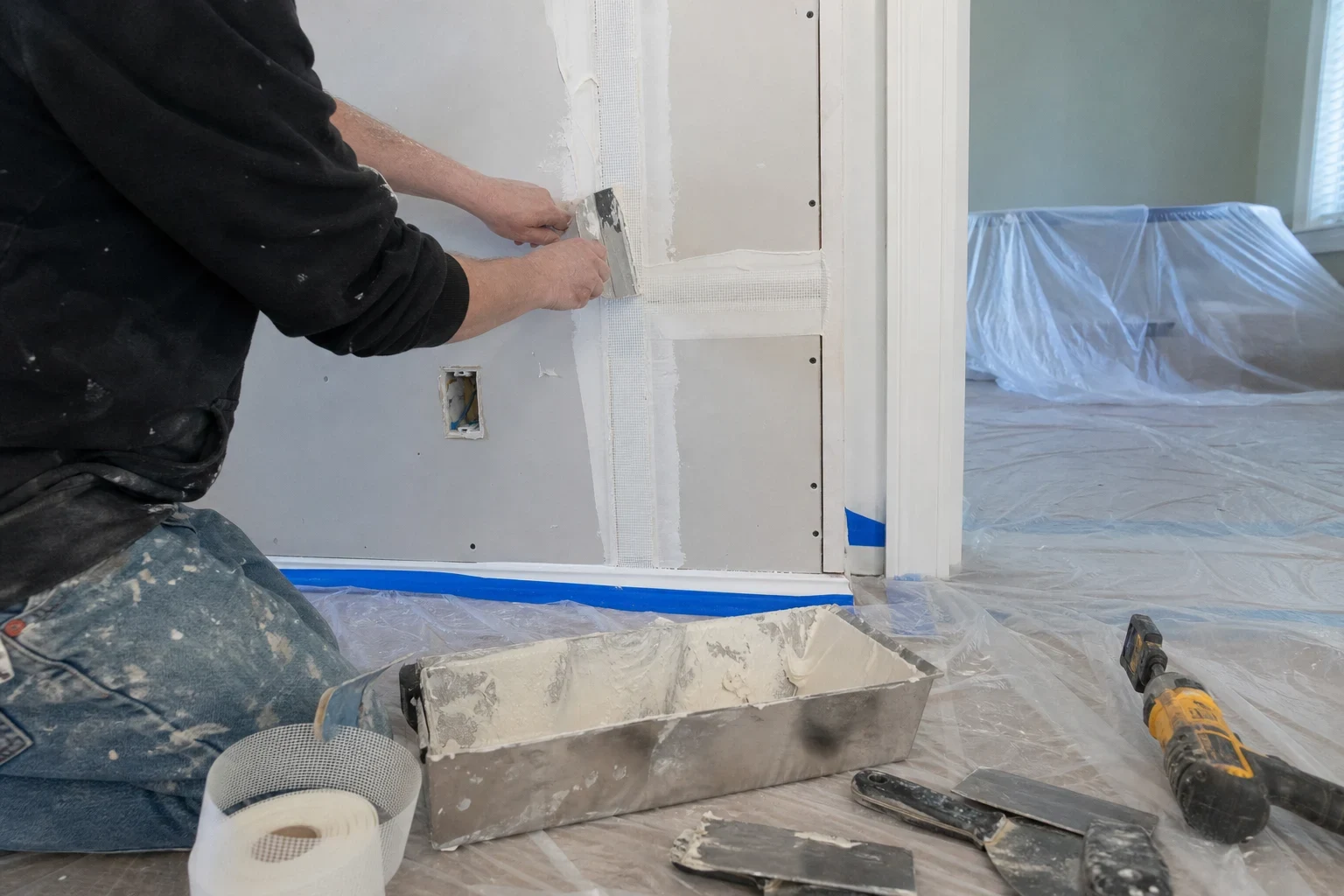
- Larger openings get wood backing or new framing support so the patch is screwed to something solid. Popped nails are replaced with drywall screws set just below the surface.
- Tape and compound in thin coats
- Seams get paper or mesh tape, then several thin coats feathered wide past the repair. Thin coats dry evenly and are far less likely to crack or shrink later.
- Texture matching
- Smooth walls stay smooth. Orange peel, knockdown or the hand-troweled look of older plaster is recreated so the repair blends with the wall around it.
- Sanding, primer and paint touch-up
- We sand with dust control, prime the new compound so it does not flash through paint, and touch up the repaired area with your paint if you have it.
Signs a wall needs repair, not just filler
Cracks that return
If you have filled the same crack twice and it opened again, the board or plaster behind it is moving. Filler alone will not hold.
Nail pops in a line
A row of small bumps along a stud means the original nails are backing out. Older walls often show this after years of seasonal swelling and drying.
Bulges or soft spots
Press gently. If the wall gives, the gypsum may have absorbed water or the plaster keys may have broken loose from the lath.
An old patch you can see
A raised square, a ridge of compound or a different sheen under paint points to a past repair done quickly. We can cut it back and redo it properly.
Holes from fixtures or movers
Doorknob strikes, anchors pulled out of the wall and furniture gouges are straightforward repairs once the edges are cut clean.
How a repair day runs
- 1
A phone conversation first
You tell us what the damage looks like and roughly how big it is. We ask a few questions about the room and the age of the wall and give you a quote by phone, then set a time.
- 2
Protect the room
Floors are covered with drop cloths, furniture is moved or wrapped, and doorways near the work get plastic if sanding will be involved. We keep a clean work area throughout.
- 3
Open, assess and rebuild
We cut the damage back to sound material, add backing where needed and fasten new board. If something unexpected turns up behind the wall, we stop and talk with you before going further.
- 4
Coats and drying time
Compound needs to dry between coats, so most repairs take more than one visit. Damp summer weather can stretch drying time a little, and we plan for it rather than rushing a coat.
- 5
Finish and cleanup
Final sanding, texture, primer and paint touch-up, then we vacuum, take up the coverings and walk the repair with you.
What moves the cost of drywall repair
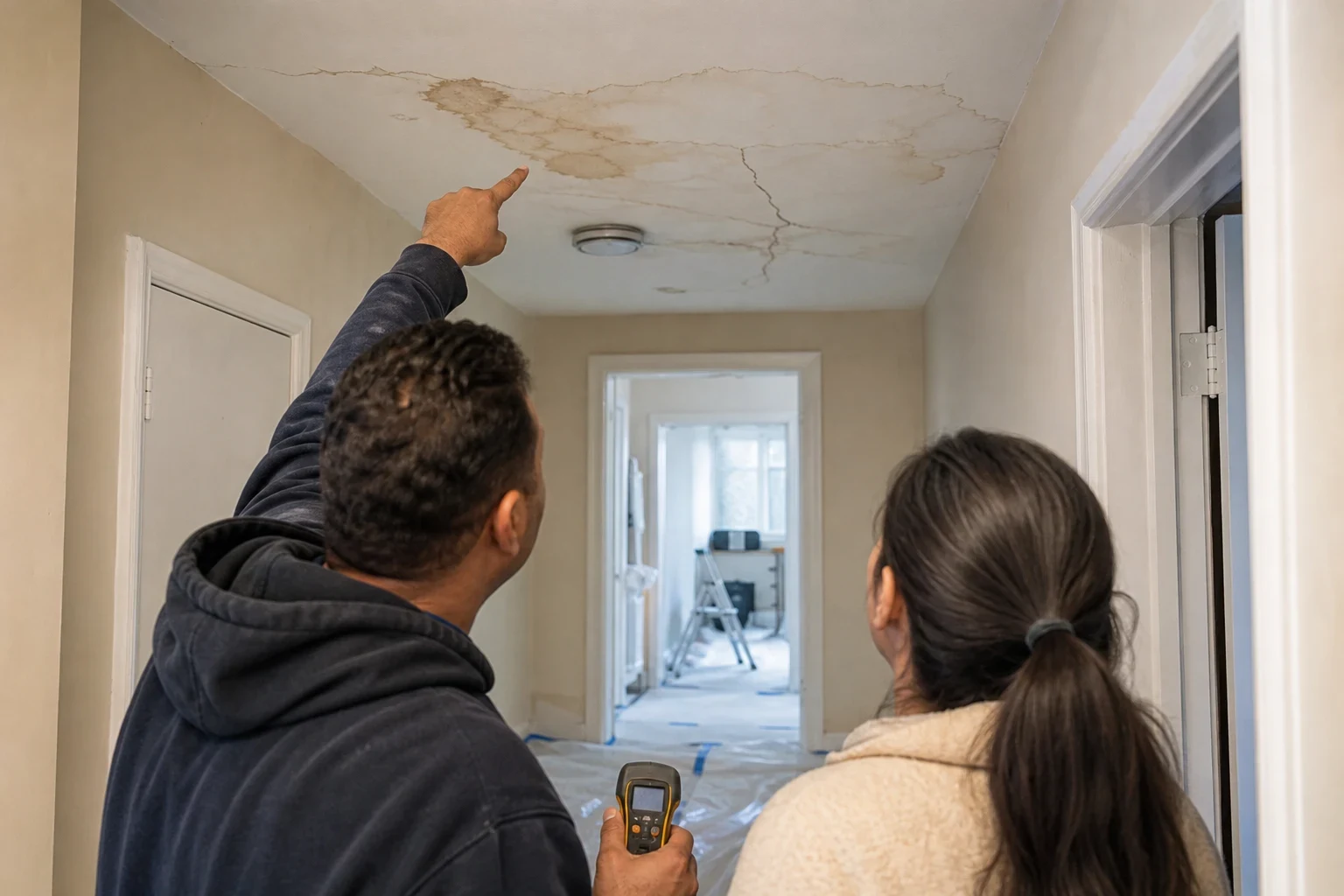
Every repair is priced on what the wall actually needs. A small hole in modern board and a cracked plaster wall with an old patch in it are very different jobs. We explain the line items so you can see where the cost comes from.
- Size and number of areas
- One repair in one room costs less per spot than several scattered through the house, though grouping them into a single visit usually saves time overall.
- What the wall is made of
- Plaster over lath takes more care to cut and bond than standard drywall. Mixed materials from past renovations add steps.
- Condition behind the surface
- Rotted backing, missing framing or water-damaged gypsum has to be replaced before finishing, and that adds labor and material.
- Texture and finish level
- Matching a hand-troweled or heavy texture takes longer than finishing a smooth wall. Walls that catch strong side light need extra attention.
- Access and height
- Stairwells, tall walls and tight spaces behind fixed cabinets slow the work and may need staging.
Drywall repair questions
Something not covered here? (516) 604-5030
Can you repair plaster walls, or only drywall?
We repair both. Plaster cracks often need the loose material removed and the edges stabilized before new board or compound goes in. We match the finished surface to the plaster around it so the repair does not look like a flat drywall square in a textured wall.
Will the repair show after it is painted?
Done properly, it should not. We feather compound wide, match the texture and prime the new area. If your existing paint has faded or yellowed with age, fresh touch-up paint can look slightly different, and we will tell you that before we start so there are no surprises.
How many visits does a typical repair take?
Most take two or three short visits because each coat of compound has to dry fully. Very small repairs can sometimes be finished faster with quick-setting compound, and we will tell you which approach fits your wall.
How much dust should I expect?
Some, but we work to keep it contained. We sand with dust control, cover floors and nearby furniture, and seal doorways when the work calls for it. Cleanup at the end of each visit is part of the job.
The damage came from a leak. Can you fix it now?
Once the leak itself has been repaired and the area has dried out, yes. Repairing wet drywall only traps moisture, so we check that the board is dry and replace any gypsum that has softened or stained through.
Ready to have that wall looked at?
Tell us what you are seeing and where it is in the house. We will talk through what is likely behind it, explain the approach and give you a quote by phone.