ServicesCeiling Repair
Ceiling Repair in Hempstead
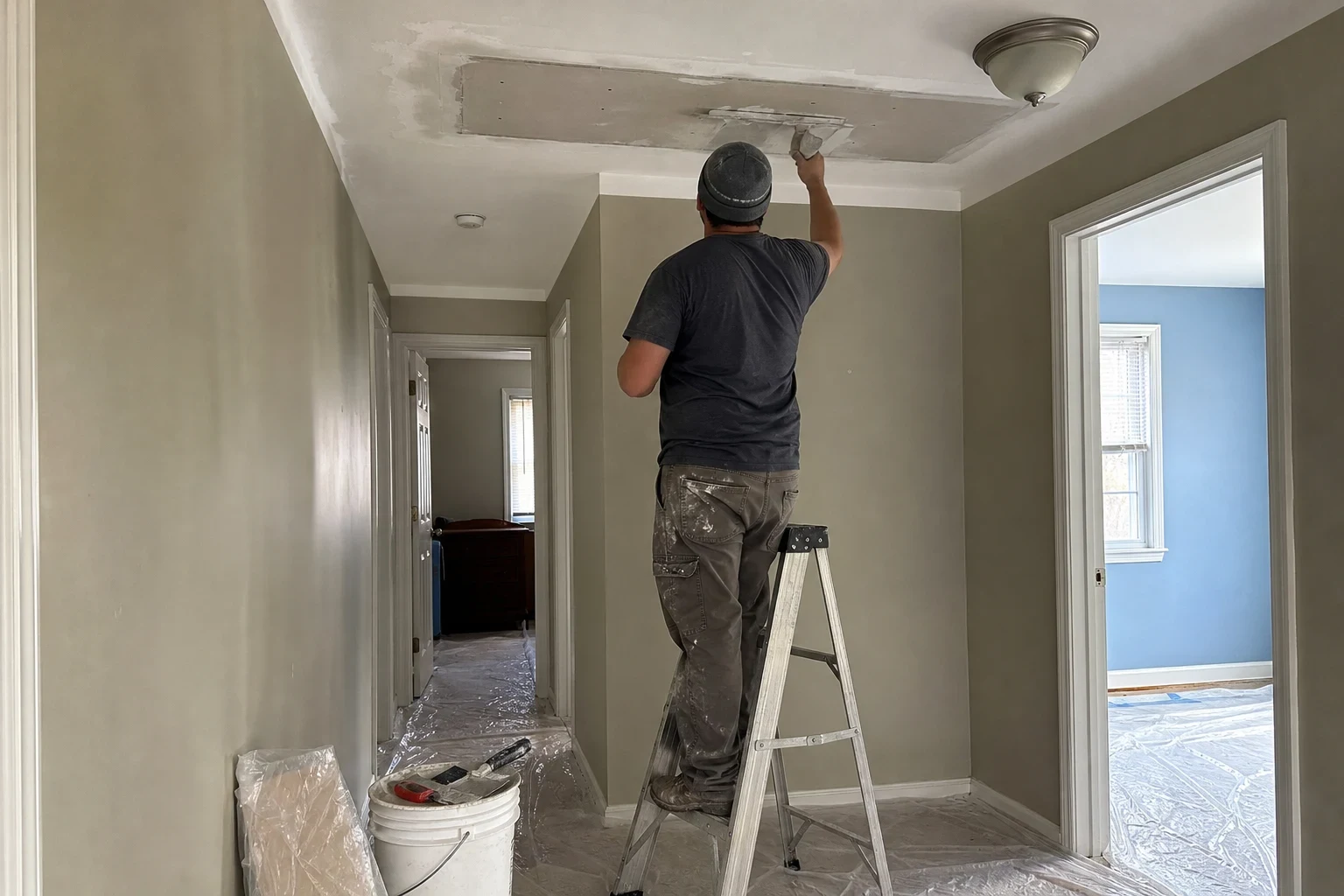
A cracked or stained ceiling is often the visible end of something older: a tired patch, loose plaster or drywall that has pulled off its fasteners. We find the cause, repair the ceiling properly and match the texture so the fix stays quiet.
What ceiling repair involves, and when it is the right call
Ceilings fail differently from walls. Gravity works on them every day, so a small problem such as a popped screw or a seam that has let go tends to grow into a crack, a ripple or a sag. Repairing a ceiling means securing what is up there first, then patching, taping and finishing so the surface lies flat and stays that way.
Older houses add a layer. Many ceilings have been repaired more than once, sometimes with drywall laid over original plaster, sometimes with a heavy skim of compound hiding a crack that never stopped moving. Before we quote anything, we look at what earlier work was done and whether it is still holding.
If the damage is limited to one area, a repair is usually the sensible answer. If the whole ceiling is loose or crumbling, we will tell you so plainly and explain what replacing a section with new drywall would involve.
What our ceiling repair includes
Finding the cause
We check for loose fasteners, failed tape, old leak damage and framing that has shifted. A crack that returns usually has a reason, and we want to fix the reason along with the crack.
Securing loose drywall or plaster
Sagging board is refastened to the joists with screws. Plaster that has lost its grip on the lath is pinned back with plaster washers before any finishing begins.
Cutting out water-damaged sections
Drywall that has been soaked and dried often stays soft and stained. We cut back to sound material, install a new piece and tape it in so the edges do not telegraph through.
Texture matching
Smooth, knockdown, swirl and older sprayed textures each need a different approach. We test the match on the patch and adjust until it blends with the rest of the ceiling.
Primer and paint touch-up
Bare compound absorbs paint differently, so we prime it. A paint touch-up over the repaired area finishes the job when the existing ceiling color can be matched.
Protection and cleanup
Floors and furniture below are covered, and dust is contained as much as the room allows. We leave a clean work area at the end of each visit.
Signs your ceiling needs attention
Brown rings or yellow stains
These mark past or present moisture. Once the source has been dealt with, the stained drywall needs to be checked for softness and sealed before it is repainted, or the stain will bleed back through.
A dip or bulge between joists
Sagging means the board or plaster is pulling away from its fasteners. It is worth looking at sooner rather than later.
Cracks that run along a straight line
Straight cracks usually follow a taped seam that has let go. Cracks that wander are more often plaster or settling, and they call for a different repair.
Small round bumps in a row
Those are nail pops. Older ceilings were often hung with nails that work loose as the framing dries and moves through the seasons.
An old patch you can see from across the room
A raised edge, a different texture or a shadow in raking light means an earlier repair was rushed. We can blend it so it stops catching the eye.
How a ceiling repair day runs
- 1
A look at the ceiling together
We inspect the damage, press on suspect areas and check above when there is attic access. You get a clear explanation of what we found and a written estimate that lists the work.
- 2
Setting up the room
We move or cover furniture, lay drop cloths and set up a stable platform. Ceiling work makes more mess than wall work, so containment comes first.
- 3
Securing and patching
Loose material is fastened, damaged sections are cut out and replaced, and seams are taped. Joint compound goes on in thin coats, with drying time between each one.
- 4
Sanding and texture
Each coat is sanded smooth before the next. Once the surface is flat, we apply texture to match the surrounding ceiling.
- 5
Prime, touch up and clean
We prime the repair, handle the paint touch-up if the color can be matched, and clean the room. Most repairs take more than one visit because compound needs time to cure.
What affects the cost of a ceiling repair
Ceiling repairs are priced by what the job actually needs, which is why we look before we quote. The written estimate breaks the work into parts so you can see where the cost comes from. If we open a ceiling and find something unexpected, we stop and talk with you before going further.
- Size and number of areas
- One nail pop and a full section of stained drywall are very different jobs. Several small repairs in one room can often be done together.
- Ceiling height and access
- Stairwells, vaulted ceilings and rooms full of furniture take more setup and more time on the ladder or platform.
- Plaster, drywall or both
- Plaster ceilings and layered past repairs take more care to secure and blend than a single layer of drywall.
- Texture
- A smooth ceiling is the most direct to finish. Matching a sprayed or hand-applied texture adds steps, and older textures may need testing before they are disturbed.
Ceiling repair questions
Something not covered here? (516) 604-5030
Can you match the texture on my ceiling?
In most cases, yes. We test the texture on the repair and adjust the mix and technique until it blends with the original. Very old or heavily painted textures can take a little more work, and we will tell you up front if a perfect match is unlikely.
My ceiling has an old water stain. Can you just paint over it?
Paint alone usually lets the stain bleed back through. We first check that the drywall is dry and solid, replace it if it is soft, then seal the area with a stain-blocking primer before the paint touch-up. The source of the water should be fixed before we start.
Is my textured ceiling safe to repair?
Sprayed ceiling textures from older decades can contain asbestos. If yours may date from that era, we recommend having a sample tested before the surface is cut or sanded. We will explain why and wait for the result before doing that part of the work.
Why does the same crack keep coming back?
Usually because it was filled rather than repaired. If the tape has failed or the board is moving, compound alone will crack again. We reinforce the joint, refasten loose areas and then finish over it.
How much mess should I expect?
Some dust is unavoidable with sanding overhead, but we keep it down. The room is covered, we sand carefully and we clean before we leave each day.
Have a ceiling that needs looking at?
Tell us what you are seeing and where it is. We will arrange a time to inspect it and walk you through a written estimate.