ServicesDrywall Finishing
Drywall Finishing in Hempstead
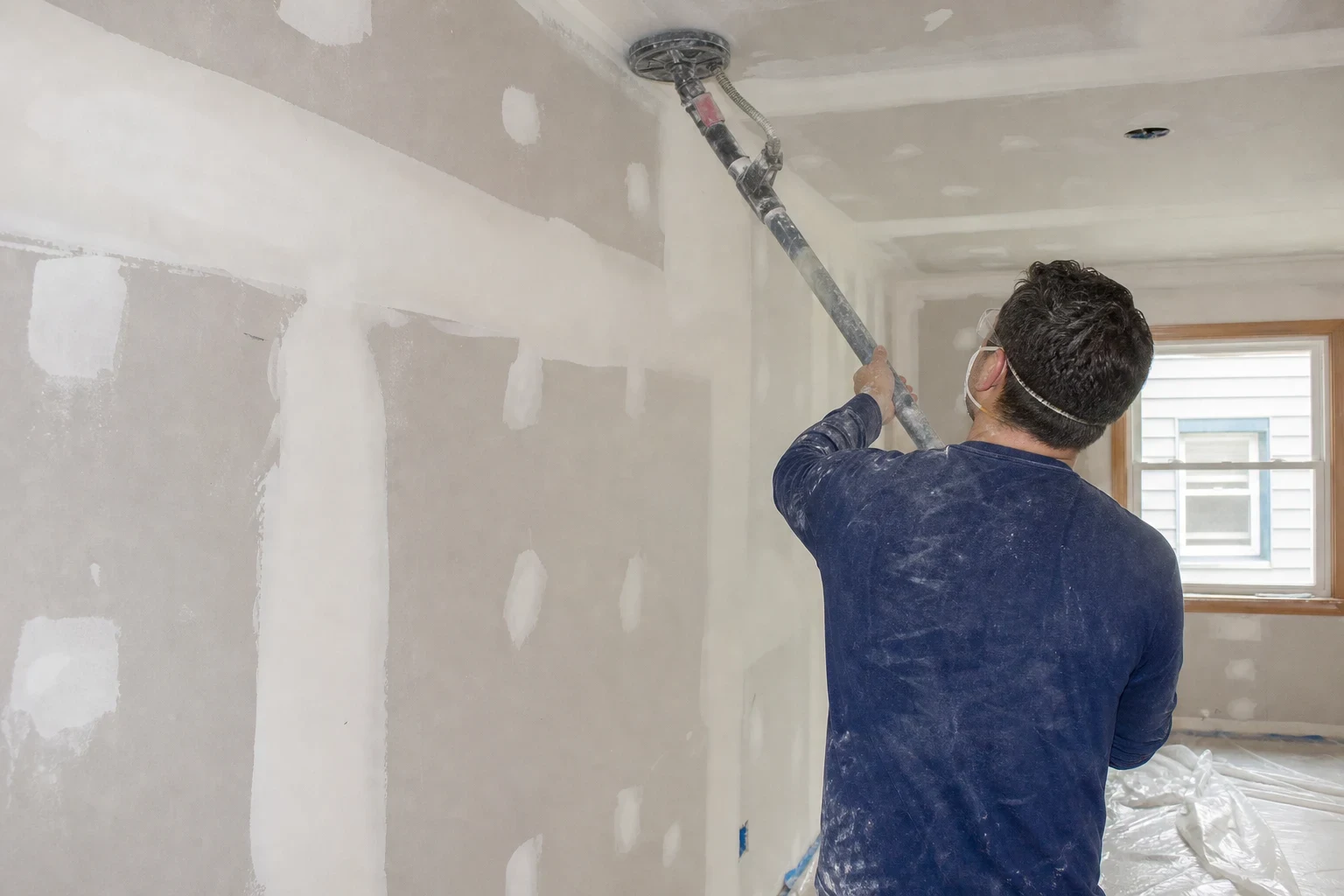
We tape, coat and sand drywall until the seams, screws and corners disappear under paint. New board, a remodel or a patch next to old plaster all get the same slow, careful build of compound and a clean work area when we leave.
What finishing does, and when you need it
Hanging drywall gets the sheets on the framing. Finishing is everything after: embedding tape in the joints, covering fasteners, setting corner bead and building thin coats of compound until the wall reads as one flat surface. Most of what you see in a finished room comes from this stage.
It is the right call after new drywall goes up, after a large repair, or when an existing wall shows every seam once the light hits it. In older houses we often finish new board right beside walls that have moved, been patched before or were never quite flat. Part of the job is making the new work meet the old without a visible line.
What our finishing work includes
- Taping every joint
- We embed paper tape in a bed of compound on flat seams and inside corners. On wide gaps or seams that meet older material, we use a setting compound first because it hardens chemically and shrinks less.
- Corner bead and edges
- Outside corners get new bead, set straight and coated so the edge stays crisp and resists dings. Where board meets old window or door casing, we keep the compound tight to the trim.
- Multiple thin coats
- We apply two or three coats, each wider than the last, and let each dry fully. Thin coats feathered out wide hide a joint far better than one heavy pass.
- Skim coating when the wall needs it
- For a Level 5 finish, or a wall with uneven texture from years of repairs, we skim the whole surface so paint absorbs evenly and nothing telegraphs through.
- Sanding and dust control
- We sand with fine grits and check the surface under a raking light before calling it done. Floors are covered, openings are sealed off and we vacuum as we go.
- Texture matching
- If the surrounding walls or ceiling carry a texture, we match it on the new section so the repair does not stand out.
Signs your walls need better finishing
Seams show through the paint
Straight lines appearing every four feet usually mean the joints were not feathered wide enough or the compound shrank as it dried.
Nail pops and screw dimples
Small bumps or circles in rows point to fasteners that backed out or were never covered with enough compound. Older framing that has dried and shifted makes this common.
Bubbled or peeling tape
Tape that lifts at the edges was laid without enough compound behind it. It needs to be cut out and re-taped, not painted over.
Patchy sheen after painting
Dull and shiny spots in the same coat of paint come from compound and paper face absorbing differently. A skim coat or proper primer fixes it.
New board next to old walls
After an addition or a partial remodel, the joint where new drywall meets original plaster almost always needs extra attention to stay hidden.
How a finishing job runs
- 1
Look and plan
We check the board, the fasteners and the surrounding walls, then agree with you on the finish level. Rooms that get strong side light from windows usually call for a higher level.
- 2
Protect the room
We cover floors, move or wrap furniture and seal doorways with plastic so dust stays in the work area.
- 3
Tape and first coat
Joints are taped, corners are beaded and fasteners get their first coat. This day sets the flatness of everything that follows.
- 4
Build, dry and sand
Second and third coats go on over the next visits, with drying time between. We sand lightly between coats and finish with a close inspection under a work light.
- 5
Clean up and hand off
We vacuum, remove the plastic and walk the room with you. The walls are ready for primer, and if you want, our paint touch-ups service can blend small areas.
What moves the cost of drywall finishing
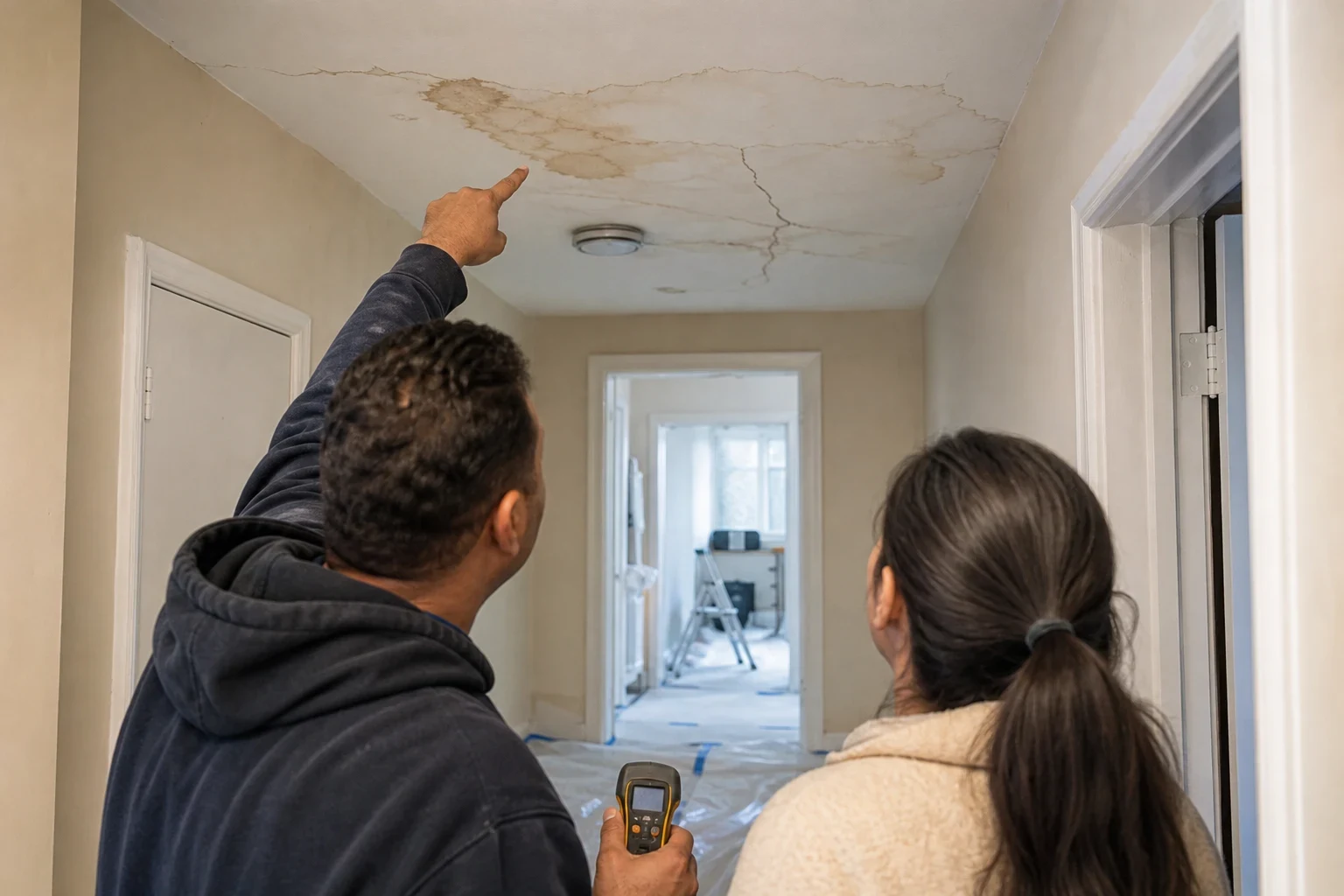
We price finishing by the work involved, not a flat rate per sheet. After we see the walls, we explain each line of the estimate so you know what you are paying for and why. You get your quote by phone once we have the details.
- Finish level
- A garage or closet may only need tape and one coat. A living room wall with afternoon sun across it needs more coats or a full skim, which takes more time and material.
- Square footage and layout
- Open walls go quickly. Stairwells, high ceilings, soffits and many outside corners add hours.
- Condition of what is there
- Blending into older plaster, correcting past patch work or fixing poorly hung board before finishing all add steps.
- Texture
- Smooth walls are the baseline. Matching an existing texture on walls or a ceiling takes extra samples and passes.
Drywall finishing questions
Something not covered here? (516) 604-5030
How long does drywall finishing take?
Most rooms take three to four visits across several days, because each coat of compound has to dry before the next. Humid summer weather can slow drying. Rushing coats is how seams crack and shrink later, so we let the material set the pace.
What do the finish levels mean?
They describe how much compound goes on. Level 4 is the usual standard for painted walls in living spaces. Level 5 adds a skim coat over the whole surface and suits walls with strong side light or glossy paint.
Can you finish new drywall so it matches my old plaster walls?
Yes, this is common work for us in older houses. Plaster is usually a little thicker and rarely perfectly flat, so we may build the joint out wider or skim the transition. The goal is that you cannot find the line once it is primed and painted.
Will there be a lot of dust?
Sanding does make fine dust, so we plan for it. We seal off the room, cover floors and vents, and vacuum during and after the work. You come back to a clean work area.
Do I need to paint right after you finish?
The compound should get a coat of drywall primer before paint so the surface absorbs evenly. We can talk through timing when you call, and our paint touch-ups service covers small blended areas.
Walls that look finished, not patched
Tell us about the room, the light and what is already on the walls. We will explain the finish level that fits and what the job involves.